
Adventures of Batman and Robin Gameplay
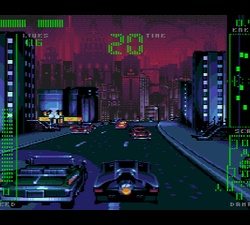
The Adventures of Batman & Robin on Sega doesn’t take you by the hand—it hauls you by the collar. From the first second, Gotham is breathing down your neck: shadowy rooftops, neon glare, a clammy wind, and a stream of enemies that never lets up. You sprint, fire off gadgets, time your jumps, snap a grappling hook onto a ledge—and in the next heartbeat you’re rolling into another ribbon of night. It’s got that arcade pulse: like the animated series sprang to life and slammed the shifter into overdrive. Call it Batman & Robin, just “Batman and Robin,” or that game based on the cartoon—the feel clicks instantly.
A pace that never lets up
This gameplay is all about rhythm. You’ve got your jump, your pinpoint batarang tosses, that lifesaving hook that yanks you from the brink. But it really sings when you lock into the level’s beat: a short pause, a shot, a roll under a gout of fire, another burst forward, a hook—and then a fresh wave on the horizon. Power-ups reshape the fight: sometimes you’re packing spread shots, sometimes homing rounds, sometimes chunky blasts for crowd control. Grab an upgrade and the run plays to a new tune, scored by your own inputs.
Every episode has its own flavor. In Joker’s theme park, clownish grins turn out to be mines, platforms jitter and try to slip out from under you, and slowing down isn’t an option—the screen literally nudges you onward. Mr. Freeze’s stages are slick and cruel: icy lanes, narrow lips of stone, cold beams that demand pixel-perfect jump arcs. With the Mad Hatter, reality gets weird: sprawling maps, tricksy mechanisms, traps that spring in step with your footfall. Two-Face drags you through factory floors and bank mazes where you’re chewed up by burst fire, forcing you to juggle spacing—close quarters are lethal, but there’s no room to retreat.
Endurance duels
Bosses are a whole separate track. This game loves long, breath-held slugfests. Against the Joker it’s rigged rides and big-grinned machines—attack patterns you learn with your muscles, not your head: hop—beat—double throw—shift—grapple again. Mr. Freeze wants you ice-cold: his beam reads your mistake and punishes instantly, but the right cadence of dodges turns the fight into a dance. Two-Face hurls grenades and hides behind hired guns, so you triage targets on the fly—clear the flank, break the bombardment, then aim for center mass. There are no fluke victories here: the deeper you get, the more every clash feels built from memorized movements and micro-decisions.
Gadgets as a playstyle
Batman’s identity is control. In The Adventures of Batman & Robin, gadgets aren’t just “stronger/weaker”—they’re the vocabulary you use to talk to the level. Homing rounds help when the screen turns into fireworks; heavy shots punch through armor; wide spreads keep Gotham’s streets under watch. But the bill is steep: lose a life and you lose that comfy build, and the next attempt plays to a different groove. It’s the arcade’s honest deal: generous with spectacle and firepower, but demanding with precision and recall.
Two-player co-op
Plug in a partner and Batman & Robin on Sega flips into true two-player chaos. One holds the high ground, the other sweeps the street; you split roles—who screens the backline, who face-tanks the boss. Co-op births that rare gameplay groove where you read each other without speaking: a toss from the right, an answer from the left, a shared surge forward. And yeah, continues melt faster than you’d like, but the moment you dodge in sync and put the boss on the mat is worth every spent life.
Each stage plays like a bite-size episode of the animated series—with you in the frame. Here it’s not about “knowing,” it’s about “feeling”: when to hang for half a second and when to tear ahead; where to jump earlier than seems sensible; when a batarang is better thrown by ear than by eye. The game teaches that rhythm isn’t haste—it’s breathing. That’s why runs rarely look the same: today you go aggro, tomorrow you play careful, and Gotham answers in a different tone each time.
The difficulty is fair but exacting. It’s not secrets that save you—it’s discipline: read beyond the edges, keep your angles, feel the timing for the hook, and don’t hoard special shots when things get hot. And yeah—take losses as part of the climb. It’s in these repeat runs that Batman & Robin shines brightest: the level stops being hostile territory and becomes a familiar block, where you know which sign is about to crash down and where to wait to avoid a wall of fire.
And yes, this is that rare run-and-gun platformer where the world isn’t just wallpaper. Gotham moves: pipes wheeze, machinery thunders, rides spook you not just with set dressing but with how they slot into the fight. In the end, The Adventures of Batman & Robin plays like a big endurance ride: it grips you, rattles you, tosses you around, but always brings you back to center—to that clean, honest action rhythm we fell for on the Sega Mega Drive/Genesis.