
Adventures of Batman and Robin story
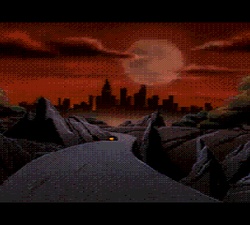
Back in the ’90s, one tune burrowed into everyone’s brain—the theme from that Gotham cartoon where shadows run longer than the streets and the Bat-Signal snaps on like thunder. On Sega, that feeling lived in a cartridge stamped The Adventures of Batman & Robin. Most of us had a simpler name for it: “Batman and Robin on Sega,” “The Adventures of Batman and Robin,” sometimes even “Batman: The Animated Series.” Flip the power switch—and the screen erupted in a noir palette, the comic leaping off the page, loud, alive, and in overdrive.
How this story came to life
The game landed in the mid-’90s, right as Batman: The Animated Series was at full roar. Artists and designers stubbornly pulled what fans loved into the 16‑bit realm: Bruce Timm’s clean silhouettes, the chill glow of streetlights, Gotham’s slow-burn tension where every alley keeps a secret. Clockwork Tortoise worked like craftsman superfans—not tracing frames, but bottling personality. Hence the pace: no hand‑holding, straight into the action. And the gift people still talk about—two‑player co‑op. Batman and Robin, shoulder to shoulder on the Sega Mega Drive, a dream for anyone who split a couch, a cola, and a bag of chips down the middle.
It wasn’t “a TV tie‑in” so much as a full‑blown side‑scrolling adventure with episodes that felt like TV chapters. One night you’re tearing through rain after a clown maniac, the next you’re climbing to a rooftop under a blood‑red sky where Two‑Face waits. In the alleys they whisper about the Penguin; somewhere, Mr. Freeze’s lab is rattling the pipes. These names didn’t pop up like a comic book checklist—they were just part of the city’s fabric, that Gotham you wanted to revisit after dark. That’s why it clicked: it made you feel inside the animated series, only without the commercial breaks.
Audio and visuals that won’t let go
On Genesis, the speakers carried a special charge: metallic, sparking, pulsing with techno grit. Composer Jesper Kyd built a soundtrack the chiptune crowd still quotes. He didn’t try to mimic the show’s orchestral sweep—he gave night chases the industrial clatter of rails, and brawls with goons an electronic snap. Paired with the art, it created rare cohesion: visual noir and music speaking the same language. You can hear Gotham even if the screen shows nothing but two pixel lamps in the fog.
The artists leaned into simple shapes and heavy shadows—and it landed. Fewer lines, more attitude. Batman isn’t “drawn,” he’s sculpted from black and midnight blue; Robin pops like a quick flash; villains are recognizable with a single turn of the head. That look sticks harder than any screenshot: years later, one frame is enough for your brain to go, “yep, that’s the one.”
How the game traveled—and how we got it
In the West, The Adventures of Batman & Robin caught eyes from store shelves, vanished into weekend rentals, and sparked chatter at clubs. Elsewhere the road was different but no less warm. Sega Mega Drive carts showed up in barebones batches—no manuals, clear plastic cases, sometimes just soft sleeves. At the market you’d ask, “Got Batman and Robin?” and the seller would fish out that familiar cover with the symbol burning in the sky. Some rented for a week, some traded it for Turtles at a courtyard swap, and some saved up for a copy of their own—to boot up every day until the night streets felt like home turf.
Step by step, it carved out a spot in our personal “Sega‑childhood” canon. You’d fire it up before bed for “one last try,” pack a second controller for a friend’s place, argue who gets to be Batman and who’s Robin. Playground myths spread in parallel: someone “found a secret with Joker’s laugh,” someone else “hit a special boss pattern,” and of course the classic—“my cousin’s friend has a different cart where the train stage is longer.” Rumors did the job of forums, and word of mouth beat any printed review.
The success wasn’t about sales charts—it was that feel of “the right Batman.” You could sense the comic‑book spine, hear the echo of the TV show, and none of it lost the character’s edge. On the Mega Drive, the city breathed its own way: staccato, anxious, with an electric aftertaste. That’s what sold it. The cartridge became a small door into Gotham—easy to step through, hard to leave before the credits.
Today, say “The Adventures of Batman & Robin,” and people remember more than levels and rogues. Sofas materialize, the warm halo of a desk lamp, a box with a scuffed corner, the scuffle for Player One. The title sounds like a password for the in‑crowd—“Batman and Robin on Sega.” And in that password you can hear a whole era: 16‑bit evenings, comic‑noir vibes, couch‑co‑op laughter, and music that still sends shivers. No museum case needed—the story lives as long as we remember a cape cutting from the dark and a city, just for a second, exhaling.